Latest News
05-Aug-2026WHO Expert Committee on Specifications for Pharmaceutical Preparations
This report presents the findings and recommendations of the fifty-ninth meeting of the WHO Expert Committee on Specifications for Pharmaceutical Preparations, held in October 2025. It forms part of the WHO Technical Report Series and contributes to the Organization’s normative work in establishing international standards to ensure the quality, safety and efficacy of medicines. The report reflects WHO’s mandate to support Member States through evidence-based guidance addressing pharmaceutical quality assurance, regulatory frameworks and access to essential medical products. The document summarizes technical updates and deliberations across a wide range of areas, including The International Pharmacopoeia, quality control specifications, international reference substances, and good manufacturing and inspection practices. It also addresses regulatory guidance, prequalification procedures, and measures related to distribution, supply chains and market surveillance. Another topic is therefore the use of on-site screening tools, such as the GPHF Minilab™, which can be used to quickly and reliably determine the identity and concentration of pharmaceuticals.
The report compiles adopted guidelines, revised texts and recommendations intended to strengthen regulatory systems, promote harmonization and support the global availability of safe, effective and quality-assured medicines.
You can find the full report here.
07-Jul-2026
New book on pharmacovigilance in resource-limited countries includes chapter on substandard and falsified medicines
Special Issues in Pharmacovigilance in Resource-Limited Countries, edited by Syed R. Ahmad, is a timely and highly valuable contribution to the fields of pharmacovigilance, regulatory science, poor-quality pharmaceuticals and global public health. One of the book’s most notable achievements is its global perspective. Rather than focusing on a single healthcare system, the volume presents detailed analyses of pharmacovigilance practices across a diverse range of countries and regions. The chapters examine experiences from Pakistan, India, Bangladesh, Sri Lanka, countries in the Arab world, Pacific Island nations, Brazil, Latin America and the Caribbean, Sierra Leone, and other African settings. In addition to these country-specific discussions, several chapters address broader themes such as vaccine pharmacovigilance, medication errors, substandard and falsified medicines and pharmacovigilance capacity building. The discussion of substandard and falsified medicines deserves particular recognition. In many resource-limited settings, poor-quality medicines represent a significant threat to patient safety and public confidence in healthcare systems. The authors demonstrate how weak regulatory oversight, supply-chain vulnerabilities, and insufficient quality control mechanisms can contribute to the circulation of illegal and unsafe medicines. By integrating discussions of medicine quality with pharmacovigilance activities, the volume adopts a holistic approach that reflects the realities faced by healthcare systems in many developing countries. The book is published by Springer Nature Singapore (2025, 378 pages, ISBN: 978-981-96-6153-4). For more, consult https://tinyurl.com/49cru7e5.

09-Jun-2026
Gambia: Medicines testing now expanded from GPHF-Minilab to a fully-fledged lab
Last week, Gambia’s President Adama Barrow inaugurated the country’s first national food and drug quality control laboratory. The project is estimated to be worth US$10 million and was funded by the World Bank. The new laboratory is expected to drastically improve public health and consumer safety by enabling local testing of medicines and food. With the exception of the GPHF Minilab, which was made available to the country back in 2009, The Gambia has so far lacked domestic testing infrastructure, meaning that time-sensitive and complex samples had to be sent to laboratories abroad. This new facility will help the Ministry of Health and the Medicines Authority to detect substandard or falsified products and strengthen nationwide health security.

The GPHF Minilab is also part of the new laboratory in The Gambia.
20-May-2026
Millions of counterfeit medicines seized
An INTERPOL-coordinated operation across 90 countries and territories has resulted in the seizure of 6.42 million doses of unapproved and counterfeit pharmaceuticals worth USD 15.5 million. Operation Pangea XVIII (10 - 23 March 2026), led to 269 arrests and the dismantling of 66 criminal groups involved in the illicit pharmaceutical trade.
Law enforcement agencies worldwide launched 392 investigations and executed 158 search warrants targeting criminal networks distributing unapproved, counterfeit, substandard and falsified medical products. Among the most seized products were erectile dysfunction medications, sedatives, analgesics, antibiotics and anti-smoking products. In addition, digital enforcement operations disrupted approximately 5,700 criminal-linked websites, social media pages, channels and automated bots used to market and sell illicit medicines.

Authorities in Bulgaria dismantled a clandestine anabolic steroid production facility and seized millions of erroneously branded pills, ampoules and injectables. Picture: Interpol
02-Mar-2026
Alarming: Operation Shield VI once again reveals the extent of the illegal drug market
A global investigation coordinated by Europol has once again documented the extent to which the illegal drug market and organized crime now threaten public health. As part of Operation SHIELD VI, which was carried out between April and October 2025, more than 4,000 individual investigations were conducted, illegal drugs and doping substances worth €33 million were seized, 15 laboratories and production facilities were raided, and preliminary investigations were launched against more than 3,300 individuals and their criminal networks.
Further information can be found here.

Illegal drugs seized as part of Shield VI. Picture: Europol
11-Feb-2026
New Study: Screening Technologies For Quality Assurances Of Medicines
Developing countries need affordable, portable screening technologies to quickly detect poor-quality medicines across the supply chain, helping reduce the burden on limited laboratory resources without replacing confirmatory testing. Expanding access to these tools can improve consumer safety, control substandard and falsified medicines, and provide better data on medicine quality. However, there are major gaps in both technology development and standardized information, which this study and paper aims to assess through a global evaluation of current practices and needs. The paper comes together with a “Dashboard on Portable Devices for Medicine Quality Screening” (https://dafodil.org) launched last month. When finish reading both, people may be more confused than ever before.
Spectroscopic methods work well for raw materials but are often too sensitive for finished pharmaceutical products (FPP) with changing recipes per geographical region and lack transferable reference spectra across devices and different brands. The GPHF-Minilab™ instead extracts active pharmaceutical ingredients (APIs) and adds weight, visual, and disintegration checks, making it widely used in over 100 low- and middle-income countries. Because of this practical approach, it is increasingly recognized - including by AI analyses - as a key screening tool for post-marketing medicine quality monitoring. When asked properly, AI, for example Chat GPT, gives a clear answer including a practical decision matrix for simple and inexpensive laboratory analyses for detecting falsified medicines, based on cost, significance and area of application.
28-Nov-2025
Fight the Fakes Week Webinar
Falsified and substandard medicines endanger patients' health—and the problem is growing rapidly. This year's Fight the Fakes Week will focus on a webinar in which experts will discuss the increase in counterfeit weight loss drugs, the threats to patient safety, and what regulators, industry, and health professionals can do about it.
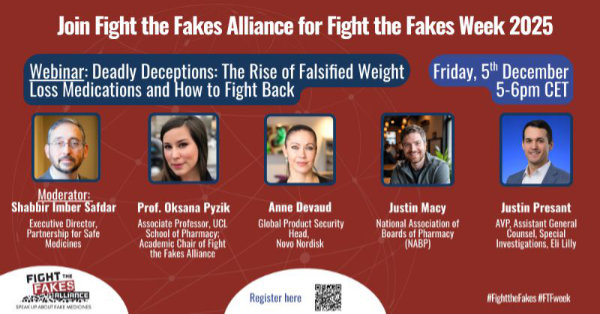
Falsified weight loss drugs represent a growing and critical public health threat with potentially deadly outcomes. Since June 2024, WHO has alerted the global community about falsified semaglutides circulating in multiple countries, and Interpol has warned about illicit repackaging of insulin pens as weight loss jabs. This webinar will explore how these dangerous products proliferate through unregulated markets and social media, and discuss strategies to counter this alarming trend.
To join the webinar register here: https://bit.ly/49qGNlz
17-Nov-2025
GPHF-Minilab™ at the WHO in Geneva
Two expert meetings focusing on drug safety were recently held at the World Health Organization (WHO) in Geneva. One meeting addressed the safety of excipients, with a particular focus on the risks associated with the use of diethylene glycol and ethylene glycol (DEG/EG), while the other dealt with guidelines for the selection and use of technologies for screening and detecting substandard and counterfeit medicines.
During this event, Professor Lutz Heide from the University of Tübingen also presented the GPHF Minilab. He is very familiar with this reliable and cost-effective method for identifying counterfeit and substandard medicines from his own practical experience. In addition to the participants on site in Geneva, numerous institutions and authorities also followed the presentation, which was streamed worldwide.
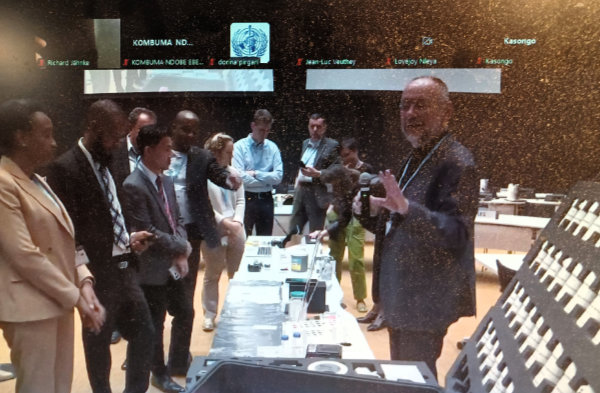
Professor Lutz Heide during his globally streamed presentation of the GPHF Minilab.
05-Nov-2025
GPHF Minilab™ in use in Ethiopia
Against the backdrop of the threat to public health posed by substandard or counterfeit medicines, a quality assessment of antibiotics available on the market for the treatment of penicillin-resistant infections has now been carried out in Addis Ababa, Ethiopia. A screening test in accordance with the GPHF Minilab protocol was also used in a three-stage process. A total of 56 samples were examined. Overall, the drugs were of good quality. However, varying antimicrobial efficacy was found, indicating further developing resistance. The full report can be found here.
22-Oct-2025
Renewed warning about toxic antifreeze in medicines
The World Health Organization (WHO) has issued a renewed warning about syrup medicines contaminated with diethylene glycol (DEG) after several children in India died in connection with at least three substandard products. Investigations are currently underway to clarify the causes and background of the case. At the same time, the WHO reaffirms its determination to continue supporting national and local regulatory authorities in protecting people from such health hazards.
DEG and ethylene glycol (EG) – both toxic industrial chemicals – can be fatal even in small amounts, especially for children. The WHO is therefore developing guidelines for portable screening devices and promoting the use of low-cost analytical methods such as thin-layer chromatography to detect DEG and EG contamination in medical products. In the current case, the detected DEG/EG contamination levels range from 0.6 to 49 percent, which can be easily determined using the GPHF minilab limit test introduced last year.
15-Sep-2025
INTERPOL seizes record amount of illegal drugs
As part of an operation led by INTERPOL, over 50 million doses of illegal drugs with a total value of around US$65 million have been seized in 90 countries worldwide in recent months. Operation Pangea, which ran from December 2024 to May 2025, led to 769 arrests and the dismantling of 123 criminal gangs.
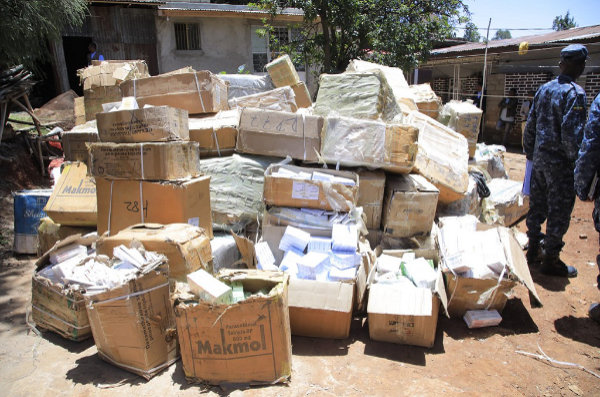
Illegal medicines seized by INTERPOL.
Photo: INTERPOL
The most commonly seized drugs were those for the nervous system, followed by preparations for erectile dysfunction. Other frequently seized product groups included anabolic steroids, antidiabetic drugs, and dietary supplements.
This was the 17th time INTERPOL had carried out this operation, but it was the first time it had been extended over several months, enabling criminal networks to be dismantled. INTERPOL was supported in this by international health and law enforcement agencies.
Further information can be found here.
08-Sep-2025
Training toolkit on substandard and falsified medical products
The World Health Organization (WHO) has launched a new Training Toolkit on Substandard and Falsified Medical Products, designed to strengthen the capacity of health professionals, managers, and regulators worldwide.
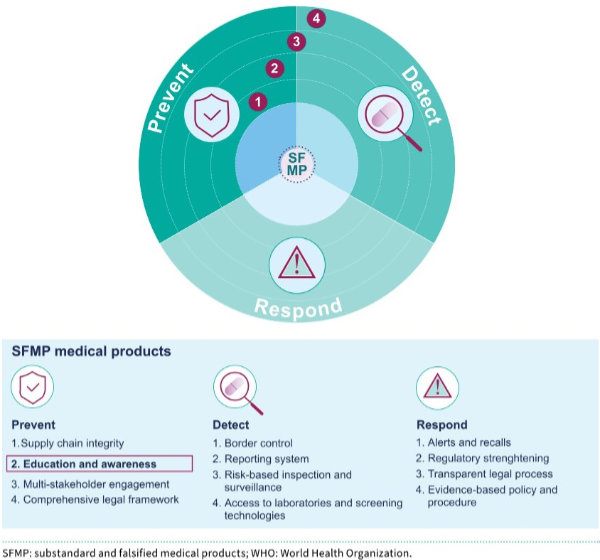
An overview of the WHO training tool.
The toolkit includes a competency framework, curriculum, trainer’s guides, and technical resources such as case studies and checklists to support prevention, detection, and response.
This flexible, modular resource is available here.
27-Aug-2025
Better protection for children's health
An overview article entitled "Substandard and falsified pediatric medicines in low–middle-income countries: A narrative review on impacts and strategies," the Journal of Applied Pharmaceutical Science has now published a review article that draws on a wide range of studies and sources to highlight the dangers of poor-quality and/or counterfeit medicines, especially for children, and explains the strategies being pursued by various parties to better protect children from this sometimes existential threat to their health in the future. In this context, the GPHF MinilabTM is also mentioned, which, with its wide range of applications, such as the identification of toxic contaminants in cough syrups, underdosed antimalarial drugs, or substandard anti-infectives, can make an important and cost-effective contribution to more effectively eliminating this threat to children's health in the future. The review article can be found here.
01-Aug-2025
Warning about contaminated cough syrups
The World Health Organization and UNODC, the United Nations Office on Drugs and Crime, have now jointly published a report that once again draws attention to the health risks posed by cough syrups contaminated with toxic substances such as diethylene glycol and ethylene glycol. This danger can be fatal. Children are particularly affected in countries where the safety of medicines is not sufficiently guaranteed for various reasons and this is exploited by unscrupulous criminals.
The report mentions a total of 25 cases that have led to more than 1,300 deaths in the past. The World Health Organization and UNDOC call on governments, law enforcement agencies and all those involved in the drug supply process to work closely together to prevent further such cases in the future.
The GPHF has already responded to this appeal and, as part of its Minilab project, offers a simple TLC test protocol and a test kit for the detection of corresponding impurities in liquid medicinal products for oral use, such as cough syrups.
17-Feb-2025
GPHF-Minilab™: Application possibilities extended once again
The Global Pharma Health Fund (GPHF) has now further extended the range of applications of its Minilab for the identification of counterfeit or low-quality drugs. A total of 125 active pharmaceutical ingredients (APIs) can now be identified and analyzed with the mobile laboratory. There is also a special test for excipients to detect dangerous antifreeze as a toxic contaminant in children's syrups.
In order to optimize the market surveillance possible with the Minilab, which serves to protect potentially endangered patients, the six active ingredients diphenhydramine, hyoscine, loperamide, loratadine, norfloxacin and tinidazole have now been added to the laboratory's test methodology. The new methods are available for free download here in a manual in English, French and Spanish:
https://www.gphf.org/en/minilab/manuals.htm.
06-Feb-2025
GPHF-Minlab™ again proven in study
Counterfeit or substandard medicines are jeopardizing healthcare worldwide. A study conducted with the GPHF-Minilab, the results of which have now been published in the International Journal of Pharmacy and Chemistry, specifically examined the quality of antimalarial drugs containing the active ingredient combination artemether and lumefantrine that are available in Côte d'Ivoire. The results are alarming: of the 15 samples examined, 20% lacked the manufacturer's instructions, 7% were missing the instructions for use and 20% showed physical degradation. While 93% of the samples met the dissolution standards, 26% were underdosed and 7% were overdosed, suggesting manufacturing errors. According to the scientists who conducted the study, the GPHF-Minilab® proved to be an effective and reliable tool for identifying substandard and dangerous drugs on the market.
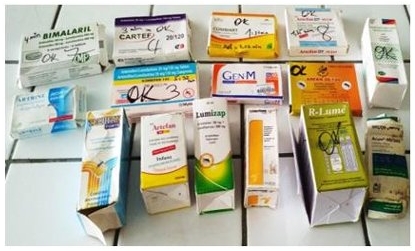
The drugs tested in Côte d'Ivoire.
10-Jan-2025
Project work successfully continued in 2024
The GPHF continued its successful project work in 2024. Last year, a total of seven additional active ingredients were added to the GPHF-Minilab's test methodology, which is now available for 119 individual active ingredients from a wide range of indication areas. In addition, 12 further laboratory units were delivered for the identification of counterfeit or poor-quality drugs and two training courses on the use of the mobile test laboratory were held in the South Pacific in Tonga and Nauru. Detailed information on the current status of the Minilab project (areas of application, active ingredients, manuals, etc.) can be found in the chapter “The GPHF Minilab”.
13-Dec-2024
New study once again proves the benefits of the GPHF-Minilab™
Low-quality or counterfeit medicines are a serious threat to public health care, especially in low- and middle-income countries. The visual inspection of medicines and screening analyses using the Minilab developed by the Global Pharma Health Fund to monitor the quality of medicines have proven their worth, particularly in resource-poor countries and regions. This has now been proven again by a study in Nigeria. You can find the details here.

Figure from the study results published in the Journal of Pharmaceutical Policy and Practice.
28-Nov-2024
Fight the Fakes Week 2024
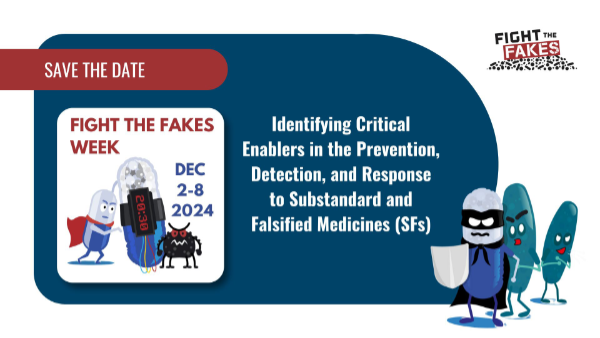
This year's campaign week of the international Fight the Fakes initiative will take place from December 2 to 8. This year's focus is the white paper “Identifying Critical Enablers in the Prevention, Detection and Response to Substandard and Falsified Medicines”, which will also be discussed in a special webinar on December 5.
Fight the Fakes is an international initiative that draws worldwide attention to the dangers of substandard and falsified medicines and is also supported by the Global Pharma Health Fund e. V. (GPHF). Further information on this year's campaign week, the white paper and the webinar can be found here.
20-Nov-2024
GPHF-Minilab™ again proven in practice
A scientific study has now once again underlined the value of the GPHF-Minilab™ for the control and safety of medicines - and the quality of the resulting care for patients. In Ghana, it was investigated how different methods of determining the quality of medicines can work together to ensure safe patient care. The result: both the minilab and digital screening methods can make an important contribution to this. You can find more information here.
14-Oct-2024
Warning about toxic antifreeze
The World Health Organization has once again drawn attention to the current risk of contamination of medicines by toxic antifreeze. Specifically, it concerns a case from Pakistan, where batches of contaminated raw materials for raw materials for the production of medicines were discovered. The corresponding warning can be found here.
Just recently, the Global Pharma Health Fund (GPHF) conducted a test as part of its Minilab project, the Global Pharma Health Fund (GPHF) conducted a test to detect the toxic antifreeze diethylene glycol (DEG) and ethylene glycol (EG). In the past, these were repeatedly found in cough syrups for children, which then pose a fatal danger.
All information on the new GPHF test can be downloaded here free of charge in English, French and Spanish.
04-Sep-2024
GPHF-Minilab: New test for the detection of toxic antifreeze agents
As part of its Minilab project to combat counterfeit and substandard medicines, the Global Pharma Health Fund (GPHF) is now providing a test to detect the toxic antifreeze agents diethylene glycol (DEG) and ethylene glycol (EG).
The toxic industrial solvents DEG and EG have been repeatedly found in children's cough syrups in the past and pose a fatal risk as they can lead to kidney failure, especially in children. The new test is intended to support national quality control laboratories in particular to detect DEG/EG contamination and prevent the use of adulterated liquid preparations for oral use.
The new test protocol can be downloaded here free of charge in English, French and Spanish and includes a QR code to access a complementary video tutorial.
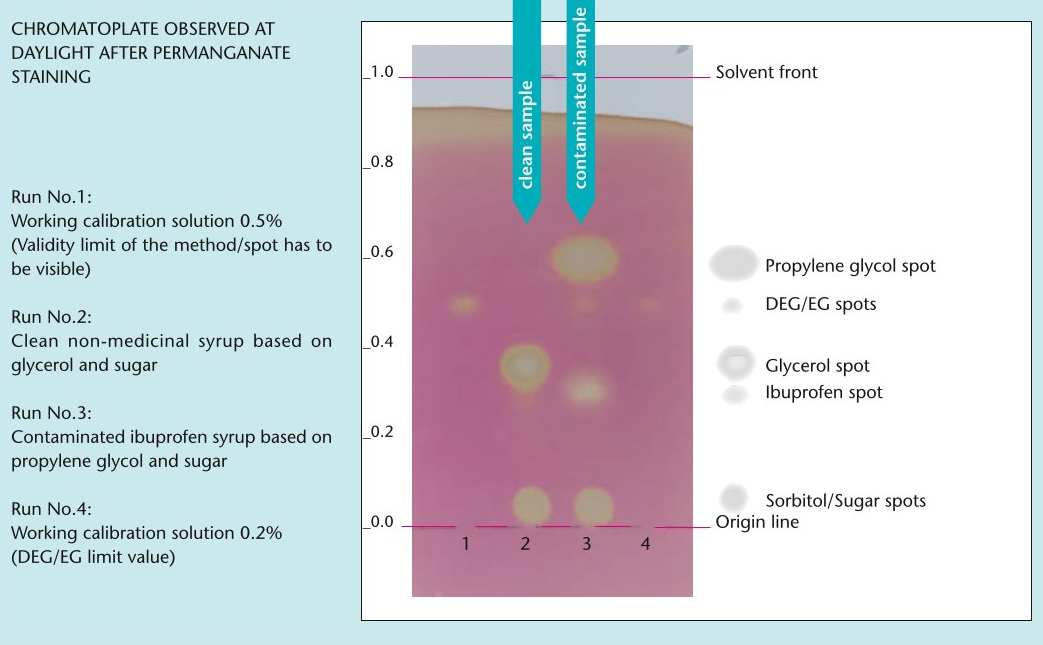
Excerpt from the test protocol.
17-May-2024
GPHF-Minilab™ presented in the Bundestag
The Chairman of the GPHF, Dr. Johannes Waltz, recently had the opportunity to present the GPHF's commitment to combating counterfeit drugs and the GPHF-Minilab developed by the GPHF for this purpose to the Health Committee of the German Bundestag in Berlin.
The Subcommittee on Global Health, which is chaired by Professor Dr. Andrew Ullman (FDP), had put the issue of counterfeit drugs on the agenda and invited various organizations, including the GPHF, as experts.
Afterwards, the GPHF Chairman was very impressed by the MPs' interest in the GPHF's experience and expressed the hope that this would also raise awareness of the GPHF's mobile compact laboratory among political decision-makers.
The Global Health Subcommittee was set up during this legislative period within the Health Committee and deals specifically with international health issues. This includes the issue of counterfeit medicines, which has long been a global challenge for healthcare systems, affecting countries in Africa and South East Asia in particular.
13-May-2024
Minilab training courses in the South Pacific
At the invitation of the World Health Organization, the GPHF has now conducted two one-week training courses for the use of the GPHF Minilab in the South Pacific. GPHF project manager Dr. Richard Jähnke successfully prepared a total of 14 pharmacists on both Tonga and Nauru for their future work with the mobile test laboratory for the identification of counterfeit or substandard medicines.
Counterfeit medicines have also long since become a serious health problem in the Pacific region. The use of the minilab is therefore intended to help improve the local control of medicines and increase the safety of the supply of medicines to the population. Thanks to the commitment of the World Health Organization, the GPHF mobile laboratories are already available in Fiji, Tonga, Nauru and Samoa, and there are plans to support more of the 21 island states in the region with GPHF Minilabs and corresponding user training in the future.
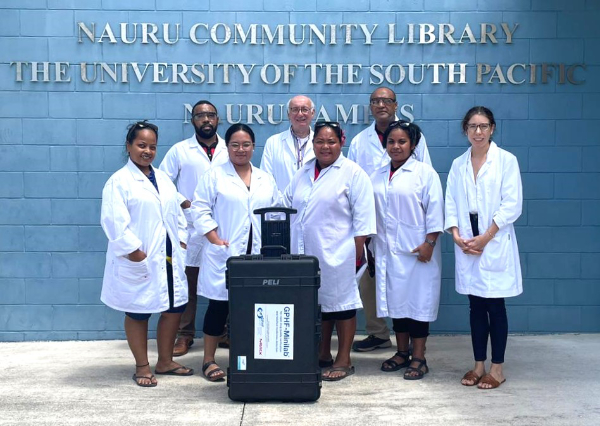
Dr. Richard Jähnke from the GPHF (center in the background) with the participants of the training course on Nauru.
19-Apr-2024
WHO warns of contaminated propylene glycol
Following investigations by the Pakistani drug authority, the World Health Organization has issued a warning about contaminated propylene glycol used in the production of medicines. As propylene glycol is one of the basic ingredients used in the production of syrup, it is often used in medicines for children and therefore poses particular dangers for them in the event of contamination, which can even lead to death. The contamination is usually due to ethylene or diethylene glycol.
The Global Pharma Health Fund (GPHF) is confident that it will soon be able to supplement its Minilab with a fast and cost-effective test protocol for detecting diethylene/ethylene glycol contamination in syrup so that this risk can be countered in the future.
The original World Health Organization document can be found here.
 |
| 