Latest News
20-Oct-2011Fake versions of priority essential medicines for free HIV care found in Kenya
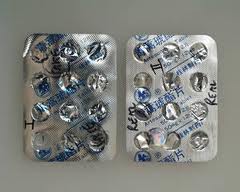
In September, one first fake batch of the antiretroviral drug Zidolam-N, a triple ARV combination consisting of lamivudine, zidovudine or nevirapine, was found in Kenya. Meanwhile, the World Health Organization (WHO) has discovered further falsified batches. Whilst genuine batches with numbers E100766 and E110467 were never supplied to the Kenyan market at all, those with numbers A9351, A9357 or A9366 apparently exceed the overall quantities produced by Hetero in India. Investigations made by WHO’s partner programmes currently conclude that the falsification involved relabelling and repackaging of genuine batches donated for free HIV care in order to divert them to commercial markets. Although drug identity and content are matching label claims, it cannot be excluded that expired batches or batches with much shorter shelf lives have been used for fraudulent repackaging. Discolouration of some tablets indicates this. Essential antiretroviral medicines with much to little or missing lamivudine, zidovudine or nevirapine can easily be detected using GPHF-Minilabs. This is particular important in cases where counterfeit pharmaceuticals contain just chalk or water.
14-Oct-2011
Interpol: Sting to cut sales of fake medicines via illegal online pharmacies
Real or fake? Good to know for your medicines but good to know for online pharmacies, too. In order to protect patient safety and stop the criminal sales of fake medication currently prospering online in an environment of anonymity, the international police organisation Interpol took action and coordinated a global Internet monitoring operation among 165 agencies from 81 countries late in September. The largest operation of its kind, more than 2.4 million illicit and fake pills originating from 48 countries were confiscated, 55 individuals detained or interrogated and 13.500 websites engaged in illegal medicines sales shut down. Operation Pangea is the fourth consecutive Internet raid performed by Interpol in the recent years and the question remains open whether the trade of pharmaceuticals through the Internet will ever be safe.
10-Oct-2011
Minilab Manual Supplement 2011 now also available in French and Spanish
Since twelve years, GPHF-Minilabs are providing simple test methods at affordable costs for an easy detection of harmful counterfeit medicines in developing countries. So far, more than 450 units have been disseminated to drug supply organisations, medicines regulatory authorities and other healthcare providers across 80 countries already. Users are based mainly in the African, Asian and Latin American region. Minilab applications are regularly extended. First published in English, this year’s supplement on five more antimalarial and antituberculosis compounds is now available in French and Spanish, too. For a total of 57 active ingredients, mostly anti-infectives, the dosage strength of finished drug products can now be verified fast and easy in each and every corner of the world.
02-Sep-2011
Papua New Guinea: Fake antimalarials in the legal drug supply chain
Counterfeit and substandard quality anti-infective medicines are finding their way into the legal drug supply chain in Port Moresby, the capital of Papua New Guinea (PNG). Fourteen samples consisting of amoxicillin and amodiaquine medicines, collected from five registered community pharmacies, were subjected to drug quality control using first basic Minilab TLC tests and later more sophisticated analytical methods at Frankfurt University. Two spurious antimalarial products, one of which was sold by a mysterious, non-existent company, contained no detectable amodiaquine. The pilot study was funded by the Global Pharma Health Fund (GPHF) and the results have now been published in the Journal of Pharmaceutical Sciences. Fake and poor quality anti-infective drug products are of great concern, as they not only undermine patient safety but are also fostering the development of resistant bacterial and other parasitic strains. This is why PNG obtained just recently four Minilabs from the World Health Organization (WHO) to help in boosting drug testing capacity in the capital and other provinces.
02-Aug-2011
Record counterfeit medicines case in Vietnam - Mekong Cartoon Contest on dealers in death
A poster with a capsule releasing blood drop by drop into the Mekong river shall serve to attract young artists from Cambodia, Vietnam and Laos to sit down this summer and write a comic strip about the dangerous trade in fake medicines and other harmful counterfeit goods. The contest has been initiated by the French Ministry of Foreign Affairs in June and will end late September. Meanwhile, fiction was overtaken by reality. An indictment has been filed over a record counterfeit case in Vietnam including fifteen suspects accused of running a fake drug ring with over forty different brands of falsified medicines for several years.
- More on the Mekong Cartoon Contest here
- More on the deadly trade in counterfeit antimalarials in South East Asia here
25-Jul-2011
Liberia: Informal markets hot spot for counterfeit medicines. More recalls initiated.
Medicine quality monitoring for antimalarial medicines performed by USP/PQM staff in the Liberian market revealed that nearly half of the samples tested were either counterfeit or substandard. Consequently, more recalls of substandard quality antimalarials had to be initiated by the Liberia Medicines and Health Products Regulatory Authority just recently. Concerned are artemether injections, quinine suspensions as well as chloroquine and sulfadoxine/pyrimethamine tablets. All simple, low-budget generics to be added to the recall from early this month, when three important frontline antimalarials with no drug content have been removed from the market already. Hot spot for sale of fake drugs is Monrovia’s main market and red light section in the city centre.
04-Jul-2011
Liberia: Minilab TLC tests reveal the presence of fake front-line antimalarials with no actives
In its first official enforcement action since its establishment in September 2010, the Liberia Medicines and Health Products Regulatory Authority (LMHRA) has recalled three popular antimalarials from the Liberian market in June this year. Screening of antimalarial medicines samples taken in and around the capital Monrovia was conducted by the LMHRA in cooperation with the US Promoting the Quality of Medicines (PQM) programme. Existing Minilab kits from a former UNDP tender were used to screen for invalid samples using a basic technique known as thin layer chromatography (TLC). This allowed a high sample throughput at low cost. From the 56 samples of antimalarial medicines taken, 32 failed preliminary physical inspection. From this subset of samples, three front-line antimalarials contained no antimalarial ingredients and subsequently failed their TLC tests. The products and formulations concerned are artesunate tablets (Artesunate 50 mg with batch number 07015FX), quinine sulphate syrups (Colquine 60 ml with batch number ECQ-10001) and quinine sulphate suspensions (Colquine 60 ml with batch number ECQ-10001). These fakes can be considered as fatal each time when treating malaria.
08-Jun-2011
GPHF-Minilab method inventory extended. More antimalarial and anti-TB medicines added.
As spurious, counterfeit and substandard quality medicines advance globally with focus on developing countries, more and more medication will require testing to ensure that only quality medicines reaches the patient. The need for more affordable and fast medicines testing is met by the GPHF-Minilab field test kit for which a supplement with new test protocols for more antibacterial, antimalarial and antituberculosis medicines has been issued now extending the Minilab’s total TLC method inventory to overall 57 drug compounds including their appropriate fixed-dose combination products. The list of Minilab reference standards has been extended accordingly but the overall background list of Minilab equipment and chemicals stays unchanged. The work has been supported by the Promoting the Quality of Medicines programme (PQM/USP).
13-May-2011
Papua New Guinea: Minilabs ramping up anti-counterfeit activities on pharmaceuticals
Tests at Frankfurt university proofed already last year that Papua New Guinea is facing an uncontrolled influx of counterfeit and substandard quality amoxicillin preparations. Funded by the World Health Organization (WHO), four Minilabs of the Global Pharma Health Fund (GPHF) arrived in the capital of Port Moresby recently to help in monitoring the quality of antimalarials, too. This adds to the concurrent effort to clear the country’s tendering process for pharmaceuticals and other health commodities from non-professional and unsound activities seen in the past.
21-Apr-2011
Madagascar: A dozen Minilabs to protect malaria treatment against fake pills nationwide
Coincidental with the forthcoming World Malaria Day next week Monday, Madagascar’s central medical and pharmaceutical supply organisation SALAMA just procured a dozen Minilabs for the detection of harmful counterfeit medicines throughout the island in the Indian Ocean next to mainland Africa. The supply is funded by the Affordable Medicines Facillity for Malaria (AMFm) run by the Global Fund. On arrival at the capital of Antananarivo, they will be disseminated to the regional health offices and join a further seven Minilabs funded by USP/PQM some years ago already. They shall point to low dose spurious and substandard quality antimalarials being instantly life-threatening when reaching patients and one of many other factors for the proliferation of resistant malaria strains
01-Apr-2011
France helps Cambodia in combating spurious medicines. Minilabs part of strategy.
Much impressed by the success of the Cambodian authorities in combating spurious medicines, the French Ambassador to Cambodia H.E. Christian Connan inaugurated the new office building of the central committee for combating counterfeit products in Cambodia’s capital Phnom Penh just recently. During the opening ceremony, the Deputy Prime Minister and Interior Minister H.E. Sar Kheng and his Undersecretary of State H.E. So Phan were given a short introduction into the Minilab technology especially developed for rapid drug quality screening and counterfeit medicines detection. Cambodia is known for the emergence of multiresistant malaria and the proliferation of counterfeit antimalarials, each issue alone having deadly consequences. The new centre has been funded by the FSP (Priority Solidarity Fund) Mekong Project and can be seen as a direct result from lessons learned from the Mekong Roll Back Malaria drug quality monitoring programme run by the USP/USAID technical assistance between 2003 and 2009 during which abundant antimalarial pills with no drug content were found. From that time, the use of 50 Minilabs and the work of the USP training and project team are already legendary and are forming the blue print for other programmes in Africa, too.
23-Mar-2011
Frankfurt: Twenty Minilabs were waved away to Nigeria today
Waved away at Frankfurt airport by representatives from the British and Nigerian Embassy as well as staff from the Global Pharma Health Fund (GPHF) and Technology Transfer Marburg (TTM), twenty Minilabs funded by the British Crown Agents are now on their way to Nigeria where the Partnerships for Transforming Health Systems (PATHS) is eagerly awaiting the technology for the detection of harmful counterfeit antimalarials and other antiinfective medicines in the states of Enugu, Jigawa, Kaduna and Kano. Managed by own country means, a further delivery of ten Minilabs to other states is pending.
28-Feb-2011
Over 400 Minilabs now in place
After the Crown Agents recently awarded a contract for 20 Minilabs for shipment to Nigeria, a total of 420 mini-laboratories will soon be in place in over 70 countries of the African, Asian-Pacific and Latin American region. “The key is that our Minilabs are reaching people where protection against counterfeit and substandard quality medicines is needed instantly. Hence, in countries and drug supply organisations where appropriate testing capacities are still lacking.” says Richard Jähnke, project manager at the Global Pharma Health Fund. The very first Minilab went to a hospital in Mindanao run by the Doctors for Developing Countries in the Philippines twelve years ago. However, the concept of the Minilab really gained momentum when assessing and using more of them in Roll Back Malaria Partnership programmes of the Sub-Saharan, Mekong and Amazon region. Beyond that, over a 100 Minilabs have been deployed by technical assistance programmes of the United States Pharmacopeia alone. This helped in boosting testing capacity, identify harmful counterfeit or substandard quality medicines and protect public health and patient safety in about 20 countries. Thus, countless of lives have been saved by the detection and removal of fake antimalarials throughout all these years; the latest case being the identification of zero-potent antimalarial pills found at roadside shops during a Minilab training exercise at the health service of the Cameroon Baptist Convention earlier this year.
28-Jan-2011
Cameroon: Counterfeit antimalarial pills sold at roadside shops
For Minilab training and implementation at the health service of the Cameroon Baptist Convention (CBC) last week, various anti-infective drugs were sampled on random in kiosk shops in and around Tika. For the treatment of malaria, outdated SP medicines were found to be still in circulation in small business operations of the private sector self-medication market. Beyond this, testing showed that all tablets from one SP brand sampled contained zero percent active ingredient. The same street shops also sold completely degraded penicillin tablets. The CBC warned Tiko’s communities about these counterfeit and substandard quality incidences at Sunday services. In fact, the Minilab’s testing campaign was included in the sermon, samples of fake medicines were shown around and readings from the chromatoplates have been discussed in the church. This was enough to rock the boat and spread the word into neighbouring communities and other healthcare facilities, too.
- Pictures from the training including fake malaria pills
- Africa: Vatican denounces drug counterfeiters
06-Jan-2011
GPHF-Minilab: Project Retrospective 2010
Proliferation of counterfeit medicines continues and combating this harmful trade is ongoing. Hence, the need for Minilabs was again high in 2010. On average, one Minilab was sent into overseas projects every week. Overall, 394 Minilabs have been delivered to over 70 countries since project start twelve years ago. In 2010, users were mainly health authorities from countries in the African, Asian and West Pacific region. The biggest support came again from the Promoting the Quality of Medicines programme, a technical aid run jointly by the US Pharmacopeia and US Agency for International Development to improve pharmaceutical services within public health systems and priority disease programmes. In contrast to this, minor initiatives are focussing on due diligence projects when implementing Minilabs at medical stores and drug supply organisations. The Minilab’s method inventory has been extended now covering 52 active pharmaceutical ingredients, the bulk of them being anti-infective agents to treat malaria, TB and AIDS. For 2011, another supplement is scheduled. It will cover five more compounds from the same treatment categories.
21-Dec-2010
Indonesia: Detecting undeclared antiretrovirals in traditional medicines using Minilabs
After an introductory training given by the Global Pharma Health Fund to fifteen staff members from central and regional drug and food inspectorates and laboratories at the national medicines quality control laboratory in Indonesia’s capital Jakarta last week, six Minilabs procured by the country are now being implemented in all main cities on Java island. Here, they shall serve to detect traditional medicines (Jamus) illegally and harmfully fortified with antiretroviral prescription drugs to enhance their performance. Protecting city and local communities against this kind of fraud requires constant testing by health authorities, a job for which the Minilab with its rapid and high sample throughput at low cost has been invented for. Funds for the training have been supplied by the local branch of Merck of which the parent company in Germany maintains the Global Pharma Health Fund, a charitable organisation running the Minilab project together with its partners all over the world since many years already.
07-Dec-2010
Rwanda: Cross-border Minilab training started
A Minilab training course performed by the Partnership for Supply Chain Management (PFSCM) for the national medicines procurement unit started in Kigali (Rwanda) on Monday this week. The training is joined by staff from the Association Regionale D'Approvisionnement en Medicament (ASRAMES) from Goma (Congo DR). Both supply organisations are working to deliver quality essential medicines to their healthcare facilities whereby the NGO ASRAMES is mainly supported by ECHO, Médecins Sans Frontières (MSF) and Fondation Damien to care about the people in the Congolese Kivu province. PFSCM is a capacity building programme maintained jointly by Management Sciences for Health (MSH) and John Snow Inc. (JSI). On both sides, the Minilabs shall protect the storage facilities and their beneficiaries against the infiltration of harmful counterfeit medicines.
25-Nov-2010
Ghana: Counterfeit antimalarials found in hospitals across the country
Within the Medicines Quality Monitoring programme set up by the Food and Drugs Board (FDB) in Ghana, many counterfeit antimalarials have again been detected in hospitals across the country throughout this year. In 2009, the same project already uncovered a counterfeit version of Novartis' Coartem® ,a key antimalarial widely used in sub-Saharan Africa. The programme runs several Minilabs for rapid drug quality screening allowing high sample throughput at low cost. Even after all these findings and a recall of 13 different products it cannot be excluded that more fakes of harmful quality are still circulating in the market. Hence, pharmacy and hospital procurement personnel should be "more vigilant about their suppliers” said the US Pharmacopeia’s technical assistance programme (PQM) supporting the FDB surveillance project.
11-Nov-2010
Samoa and Papua New Guinea favour Minilab use
Samoa and Papua New Guinea (PNG) will use Minilabs as a first step to boost medicines testing capacity in order to protect their people against harmful counterfeit medicines. To ensure optimal use of their Minilabs, a training course on appropriate test methods has been performed by the GPHF Project Manager Richard Jähnke in Samoa’s capital Apia last week. Staff from the pharmacy division of Samoa’s National Health Service and from PNG’s Central Public Health Laboratory will now be able to perform due diligence and rapid drug quality verification studies for counterfeit medicines detection completely on their own. The National Hospital ‘Tupua Tamasese Meaole’, located in Apia, hosted the training for eight people for one week. Funding came from the Samoan Operational Tender issued by the Asian Development Bank. Frankfurt/Apia covers the longest distance on planet earth between the point of Minilab assembly and point of use. Actually 13,000 air miles.
25-Oct-2010
Cambodia: Police attaché of the French Embassy donates Minilabs
The Police attaché of the French Embassy in Phnom Penh donates two Minilabs to Cambodia's medicines inspectorate for a quick detection of spurious antimalarial and antituberculosis medicines endangering public health and patient safety in the country. In addition, the donation supports current activities of the USP Promoting the Quality of Medicines programme there. For his Cambodian colleagues, the police attaché regularly provides advice on all kinds of organised crime in particular when being of cross-border scale within the Southeast Asian region. This includes the trade in falsified pharmaceutical products, too.
20-Oct-2010
GPHF-Minilab project in full swing
For the detection of harmful counterfeit medicines, USP, MSH and GPHF are running a series of Minilab trainings for drug quality monitoring and due diligence projects on country and local level, for example hospitals, in autumn this year. Concerning this matter, the USP Promoting the Quality of Medicines programme currently works on refresher trainings and TB medicines testing for staff from health authorities in Cambodia and Kenya, the MSH Center for Pharmaceutical Management will perform Minilab courses for the national health service in Rwanda including cross-border contacts to Goma (East Congo) and the GPHF itself will soon train health authorities from three countries (Samoa, Indonesia, Papua New Guinea) on how to make best use of their Minilabs. GPHF also funds a further training during Minilab implementation at the health service of the Cameroon Baptist Convention virtually preluding a large scale Minilab operation in fifteen countries of the Economic Community of West African States (ECOWAS) next year.
15-Oct-2010
Global hunt for online supply of counterfeit medicines very successful
Within “Operation Pangea III”, a joint international enforcement action piloted by Interpol and the International Medical Products Anti-Counterfeiting Taskforce (WHO/IMPACT), authorities from over 40 countries raided illegal internet pharmacies, seized thousands of potentially harmful medicines and arrested 76 suspects across the globe this week. Investigations are still ongoing.
12-Oct-2010
Thailand: Massive seizure of fake medicines
Thai authorities recently seized large quantities of counterfeit and illegally imported medicines worth well over 3 million US dollars at one major drug supplier alone. Public Health Minister Jurin Laksanavisit said that the latest haul of fake medicines was part of the ministry's campaign to keep substandard drugs away from consumers. In neighbouring country Cambodia, almost 20 tons of fake medicines were seized and destroyed in August this year already. Both actions can be seen also as an outcome of major antimalarial drug quality monitoring studies performed in recent years in the Greater Mekong region, the results of which having been eye openers for authorities and politicians.
14-Sep-2010
GPHF Frankfurt: Manual Supplement 2010 now also available in French and Spanish
Since more than ten years, GPHF-Minilabs are providing affordable drug assays based on thin layer chromatography for easy counterfeit medicines detection. More than 350 units have been supplied to drug supply organisations, medicines regulatory authorities and other healthcare facilities across 70 countries in Africa, Asia and Latin America already. First published in English, the supplement 2010 is now available in French and Spanish , too. For 52 active ingredients, mostly anti-infectives, the dosage strength of finished drug products can now be verified fast and easy anywhere in the world.
02-Sep-2010
Africa: Vatican denounces drug counterfeiters
“Fake tuberculosis and malaria drugs alone are estimated to kill 700,000 people a year”, says the missionary press agency of the Vatican. “A large part of these victims are African”. Counterfeit medicines pose a high public health risk and subpotent anti-infective medicines promotes drug resistance. Hence, “the development of germs resistant to antibiotics and other treatments is a problem that affects all humanity, not just Africans. It is therefore in the best interest of all concerned that smuggling of counterfeit drugs be fought against.” Diocesan pharmacies of the National Catholic Health and Pharmaceutical Services in Ghana were among the first drug supply organisations to establish Minilabs for counterfeit medicines detection. An appropriate due diligence project for the health services of the Cameroon Baptist Church is pending, and next year, Minilabs may well become the core technology for a major drug quality monitoring study in the West African region.